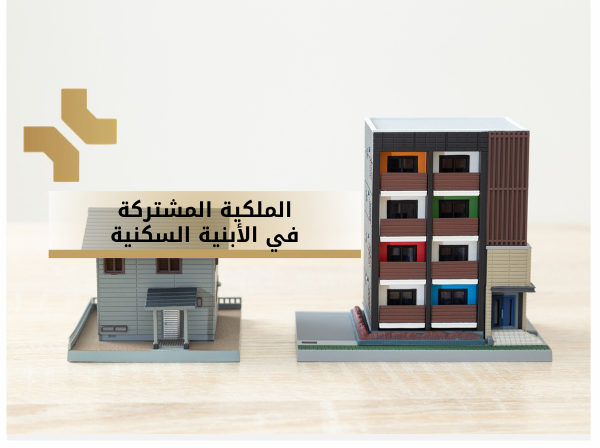
With the rapid increase in residential buildings across Amman and the rest of the Kingdom, shared residential ownership (common property) has become one of the most concerning issues for residents. When more than one owner shares parts of a building that cannot be allocated to a specific unit and are considered common, the need for proper management of shared residential buildings becomes essential to protect residents’ rights.
In this article, we highlight the most important legal rules governing shared residential ownership and explain them in a clear and simplified manner.
The common property law within the shared ownership system in residential buildings is a legal framework under which shared ownership arises among all owners of apartments or residential units within the same building.
Each owner has full ownership of their individual apartment or unit, while simultaneously sharing ownership of the common parts with the rest of the owners, in proportions corresponding to the area of their unit—without having the right to exclusively dispose of these common parts.
These are parts designated to serve the building and for the common use of residential unit owners or occupants, such as tenants. These parts are determined based on the preliminary subdivision plans kept by the Public Corporation for Housing and Urban Development, until the official subdivision of the property is completed.
They include the following:
Designated common real estate areas within the building
The land on which the building is constructed
The property land
The roof of the top floor if it is not subdivided or privately owned
Parking areas
Building foundations and walls
Ventilation ducts
Staircases and elevators
Water and sewage networks and lines
Air conditioning, heating, and electrical systems
Telecommunications systems located outside residential units, including related equipment and service rooms
According to the shared ownership system in force in Jordan, common areas in residential buildings are managed by the Owners’ Association, which is the primary legal entity responsible for managing, using, and maintaining the shared parts of the building.
According to the Department of Lands and Survey Law, the Owners’ Association is a legal entity formed by all owners of residential units within the same building.
An Owners’ Association is established automatically once the first residential unit is sold by the original owner, and it has the following characteristics:
It has legal personality and an independent financial liability to the extent necessary to manage the building, and it has the right to litigate in accordance with the law.
Each Owners’ Association is assigned a national number issued by the Department, and a name derived from the land plot number, location, or the project name recorded in the real estate register. It may also adopt another name.
Any owner of a residential unit or apartment in the building becomes a member of the Owners’ Association automatically upon registration of ownership in the real estate register. This membership ends if ownership is transferred to another person.
The management of the Owners’ Association constitutes the legal and organizational framework for managing common parts in residential buildings and includes the following tasks:
Management of common areas: elevators, staircases, roofs, parking areas, gardens
Maintenance and operation: setting periodic maintenance plans and contracting service providers
Financial management: preparing budgets, collecting service fees, paying obligations
Legal organization: enforcing internal regulations and General Assembly decisions
Dispute resolution: addressing disputes between owners through proper legal channels
Contracting and supervision: contracting security or management companies and monitoring their performance
The Owners’ Union is a higher entity than the Owners’ Association. It is formed automatically for Owners’ Associations within a residential building or for owners of independent units within a residential complex.
It has legal personality and an independent financial liability sufficient for management purposes.
Managing infrastructure located within the residential building or complex boundaries and designated exclusively for its service
Exercising the rights of management, use, and exploitation of infrastructure within the building or residential complex through its Board of Directors
Undertaking necessary actions and entering into contracts for infrastructure maintenance, protection, removal of encroachments, and continuity of services
The need for an Owners’ Union arises in large residential complexes, where shared facilities exist between multiple buildings, to unify management, reduce costs, and regulate relations between different Owners’ Associations. (H3)
| Element | Owners’ Association | Owners’ Union |
|---|---|---|
| Scope | Single building | Multiple buildings / complex |
| Members | Individual unit owners | Owners’ Associations |
| Role | Building management | Management of shared facilities |
| Level | Basic | Higher / Coordinating |
| Example | Residential building | Integrated residential complex |
Owners have multiple rights, including using common parts without harming others’ rights, participating in management and maintenance, objecting to any improper or harmful use, and benefiting from shared facilities such as rooftops in accordance with approved regulations.
Owners must contribute to maintenance and repair costs according to their share, refrain from making changes to common areas without approval, comply with internal regulations, and avoid using common parts in a way that compromises safety or causes disturbance.
Common disputes include rooftop or corridor investment, refusal to pay maintenance fees, unauthorized modifications, and misuse of shared facilities.
Disputes are usually resolved amicably, but legal action may be taken if settlement efforts fail.
No. An Owners’ Association may not change its name pursuant to Article 6(b) of the Regulation on the Management of Common Property in Real Estate and Residential Complexes No. (89) of 2020.
Yes. It is binding on unit owners, their general and special successors, and occupants.
The purpose of discussing shared ownership is to raise awareness among owners of their rights and obligations and to avoid disputes arising from lack of knowledge.
Finally, it is important to distinguish between shared ownership in real estate in general—which is a broad legal concept—and shared ownership in residential buildings, which is a specific application. Not all shared ownership applies to residential buildings, and not all residential ownership constitutes shared ownership.
If you still have questions about shared ownership, feel free to contact the Homes Jordan team for legal and engineering consultations:
Phone: 00962791230777
Location: Homes Jordan Real Estate Offices
Social Media:
Facebook
Instagram
YouTube
LinkedIn
For direct inquiries, contact us via WhatsApp
All article rights reserved © Homes Jordan 2025
Real Estate Marketing in 2026
01-Apr-2026
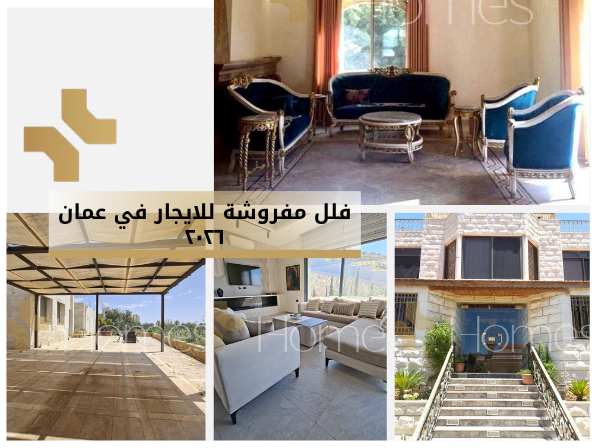
Luxury furnished villas for rent in Amman 2026
23-Mar-2026
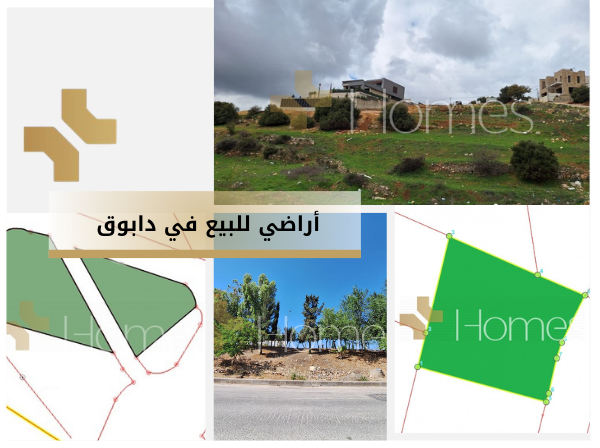
Real Estate Lands for Sale in Dabouq, Amman 2026
09-Mar-2026
 JOD
JOD AED
AED USD
USD